
Technically, there’s more than one problem with export economies. But they all feed into each other, resulting in a much bigger and singular problem. To start, export economies rely on there being a party that is willing to import the exporter’s goods and services. Usually, the exporter can offer such things at equal quality (or better) than the importer can produce on its own, and at a better price too. The general argument for the benefits of international trade follow this logic, calling it a specialization in competitive advantage. However, this model assumes that the goal is to maximize the ability to consume, regardless of others consequences.
One way that an exporter can achieve a competitive advantage is by not caring about environmental impacts. Any diffuse cost that the producer does not have to factor into its bottom line is an externality. Governments can force producers to factor in the negative consequences of these externalities through taxation and regulatory oversight. Conversely, if the government removes taxes or loosens oversight, then society will pay the costs of those externalities, effectively subsidizing the manufacturer; policy critiques call this phenomenon socializing the costs of private profits. Governments will pursue this race to the bottom to ensure full employment, even to the detriment of broader welfare.
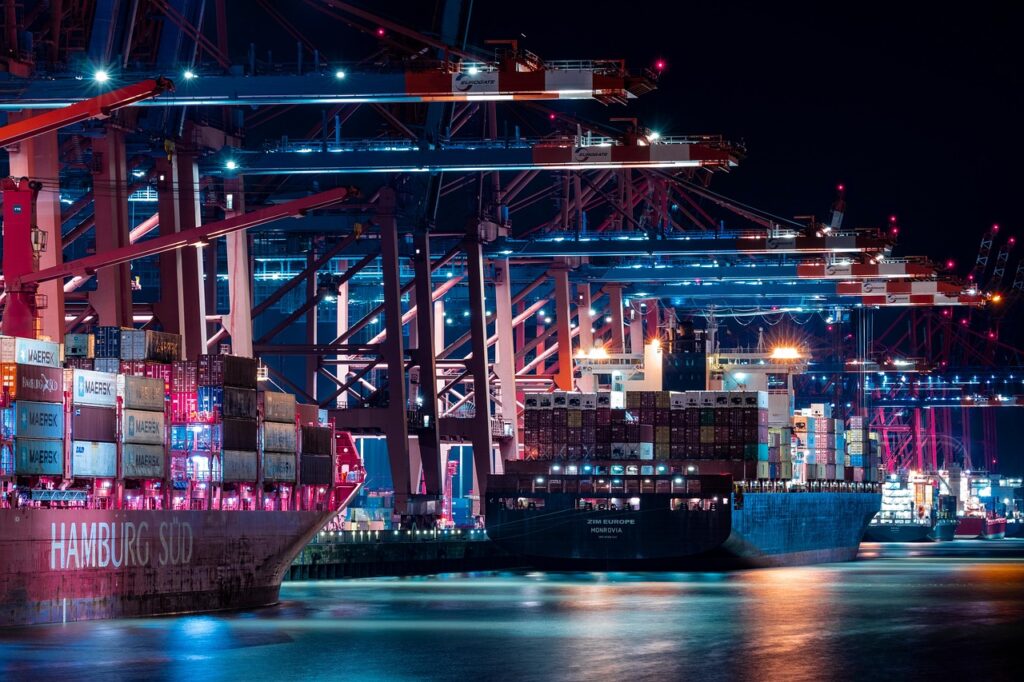
Right now, the cheapest way to move goods from exporter to importer is via cargo ship. And helpful for shipping companies, international waters are a rather murky area where a lot of laws are loosely applied. Recently, the US blocked an attempt to internalize those externalities impact via global fee. For more on the US and international organizations, you can read this Mulawin Missive: Can the US Withdraw From the United Nations?.
Returning to “The Problem”
Ultimately, the problem with export economies can be stated as: Governments want a predominantly manufacturing economy, but there is a limited demand for manufactured goods; therefore, national governments are competing with each other to ensure their nation’s goods are the cheapest around.
The reason that is a problem is that, like all trades, there must be two participants: the exporter and the importer. Everyone wants to be an exporter, and no one wants to import; more specifically, every government wants to be an exporter of manufactured goods. For better or worse, the world is in love with manufacturing. Services are conspicuously absent from this governmental preference. However, not everyone can be employed in manufacturing. Even worse for exporters, greater manufacturing expertise results in employing very few people to make goods.
Why Manufacturing?
People have to work to extract primary resources, and the service sector is the current end state of developed economies. However, the manufacturing sector is considered the sector that provides dignified jobs for everyone, regardless of education. There are ongoing debates on whether the post-WWII era’s broader regulatory and political regime ensured that the economy provided such dignified work (as opposed to the abundance of manufacturing work being the proximate cause), and there are still asterisks regarding who “everyone” was.
As a result of this competition to sell goods internationally, national governments are functionally attempting to beggar thy neighbors. Specifically, exporters are creating a situation where they must produce the cheapest goods at any social cost. Success then ensnares import economies into a lender-borrower relationship. Consequently, the pursuit of becoming an export economy ultimately impoverishes the exporter’s population, strains close alliances, and heightens rivalries. This competition also repeats itself at every sub-national level of administration, most commonly seen in the offering of tax credits to large businesses, such as the US competition to secure Amazon’s HQ2.
The Solutions
Solving this problem requires articulating an ideal situation, an alternative to the current state of affairs. If autarky is the goal, then crushing consumer demand for goods and services that are not available domestically would be a solution; if the goal is for a government to end its international debts and no longer be a net borrowing economy, there are two solutions: default on the debts or continue pursuit of an export economy strategy; and if full, dignified employment is the goal, then governments would have to improve labor rules such that employers cannot easily exploit employees and also ensure that each individual is able to afford a dignified, healthy lifestyle from full-time work.
More difficult for governments, pursuing any given solution does not happen in a vacuum. Other governments will also be pursuing a perceived best for their country, which may hinder each other. As a result, the pathway to achieving the ideal state must change, and as domestic responses lead to leadership change, the vision of perfection will change. This turbulence will lead to greater instability, resulting in greater deviation from the plan.